If there is one species that puts the Mexican Caribbean on the global sportfishing map, it is the Atlantic Sailfish. Known for their incredible speed, acrobatic leaps, and vibrant dorsal sails, these pelagic predators draw anglers from around the world to the waters off the Yucatan Peninsula.
But catching a sailfish is not just about showing up; it is about timing and technique. The waters around Cancun and Isla Mujeres are part of a massive migratory route, meaning these fish are not here year-round in large numbers.
If your goal is to battle one of the ocean’s fastest fish, you need to understand the Cancun sailfish season, how captains target them, and what to expect when you hear the reel scream.
Quick Answer: The peak sailfish season in Cancun generally runs from late December through July, with the highest concentration of fish typically found between March and May. Captains primarily target them offshore using trolling techniques with ballyhoo or artificial teasers.
When is the Best Time to Catch Sailfish in Cancun?
While it is possible to encounter a resident sailfish outside of the main migratory window, you want to stack the odds in your favor.
The Peak Season (March – May)
Spring is the undisputed golden window for billfish in the Mexican Caribbean. During these months, massive schools of sardines and flying fish congregate in the warm Gulf Stream currents just offshore from Cancun and Isla Mujeres. The sailfish follow the bait. During a good day in peak season, it is not uncommon for a boat to raise multiple sailfish.
The Shoulder Seasons (Winter and Summer)
- December – February: The early arrivals begin showing up as the water temperatures shift. Winter cold fronts (locally known as “Nortes”) can push baitfish closer to the surface, sparking excellent feeding frenzies, though the weather can sometimes be choppy.
- June – July: The tail end of the season still offers solid action, often overlapping with the arrival of other big game species like Blue Marlin and large Mahi-Mahi.
Pro Tip: If your main goal is sailfish, choose your travel dates around the peak seasonal window (April is often exceptional) rather than simply booking the cheapest available day of your vacation.
How We Fish for Sailfish in Cancun
Catching a sailfish requires teamwork between the captain, the mates, and the angler. Here is how it typically goes down on a deep sea charter.
1. Finding the Fish
Captains do not just drive blindly; they look for specific indicators. They hunt for temperature breaks, floating debris, sargassum weed lines, and most importantly, diving birds. Frigate birds circling and diving are a dead giveaway that sailfish are pushing bait to the surface.
2. The Trolling Spread
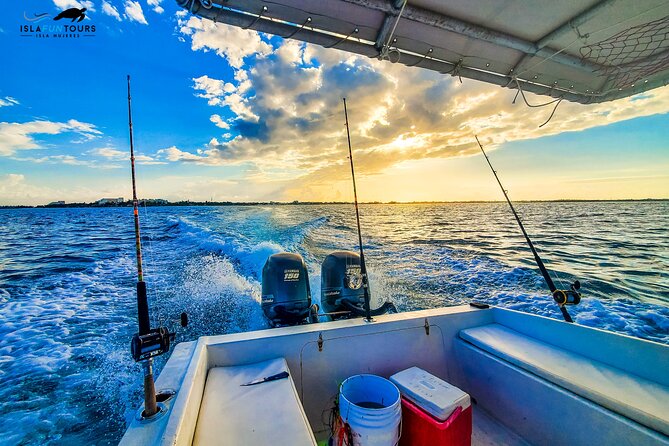
Once in a promising area, the crew will deploy a spread of baits. The standard technique in Cancun is trolling rigged ballyhoo (a type of baitfish) often paired with brightly colored skirts. The crew will also run “teasers”—hookless lures that splash and create a commotion to draw the sailfish up from the depths.
3. The Hookup and the Fight
When a sailfish strikes, it is pure chaos. The fish will often smack the bait with its bill before eating it. Once hooked, they are famous for their explosive, tail-walking jumps.
As the angler, you will need to keep constant tension on the line. Sailfish have hard, bony mouths, and giving them any slack usually results in a thrown hook. Listen to your mate, keep your rod tip up, and reel down smoothly.
Catch and Release: Protecting the Species
The Atlantic Sailfish is a prized game fish, and local captains are deeply committed to its conservation.
All sailfish caught on reputable Cancun fishing charters are strictly catch-and-release.
The crew is highly trained in handling these fish safely. When you bring the fish to the boat, the mate will carefully leader the fish and control the bill. You will have a brief window to snap a quick, unforgettable photo before the mate revives the fish in the water and ensures it swims away strong to fight another day.
What to Bring on a Billfish Charter
Offshore fishing means you will be exposed to the elements for several hours. Come prepared:
- Polarized sunglasses (Absolutely essential—they cut the glare so you can actually see the neon-blue fins of the sailfish lighting up behind the bait).
- Long-sleeved UV fishing shirt.
- Non-slip boat shoes.
- A camera or GoPro with a secure strap.
- Motion sickness medication, taken before you board, as the Gulf Stream swells can be rolling.
Frequently Asked Questions
Are we guaranteed to catch a sailfish? No captain in the world can guarantee a wild, migratory fish. However, booking during the peak season (March-May) with an experienced crew dramatically increases your chances of a successful hookup.
Do I need heavy tackle to catch a sailfish? No. While they are big fish (typically ranging from 40 to 80 pounds in this region), they are fought on relatively light 20 to 30-pound class trolling gear. This makes the fight incredibly sporty and allows you to feel the true power of the fish.
How far offshore do we need to go? Unlike some destinations where you have to run for hours, the drop-off in Cancun is relatively close. Depending on where the bait is holding, you might find sailfish anywhere from 5 to 15 miles offshore.
Can a beginner catch a sailfish? Absolutely. The crew handles all the complex rigging, baiting, and boat maneuvering. When the fish hits, they will hand you the rod and coach you through the entire fight.
How long of a charter do I need? To properly target sailfish, a minimum of a 6-hour or 8-hour (full day) charter is highly recommended. It takes time to locate the fish and work the bait schools.
Ready to battle the fastest fish in the ocean? If you are traveling to the Mexican Caribbean during peak season, don’t miss your shot at a trophy billfish. Explore our Cancun deep sea fishing charters and book your offshore adventure today!
Leave a Reply